

Selling My CDs and DVDs: The Creator’s Guide for 2026
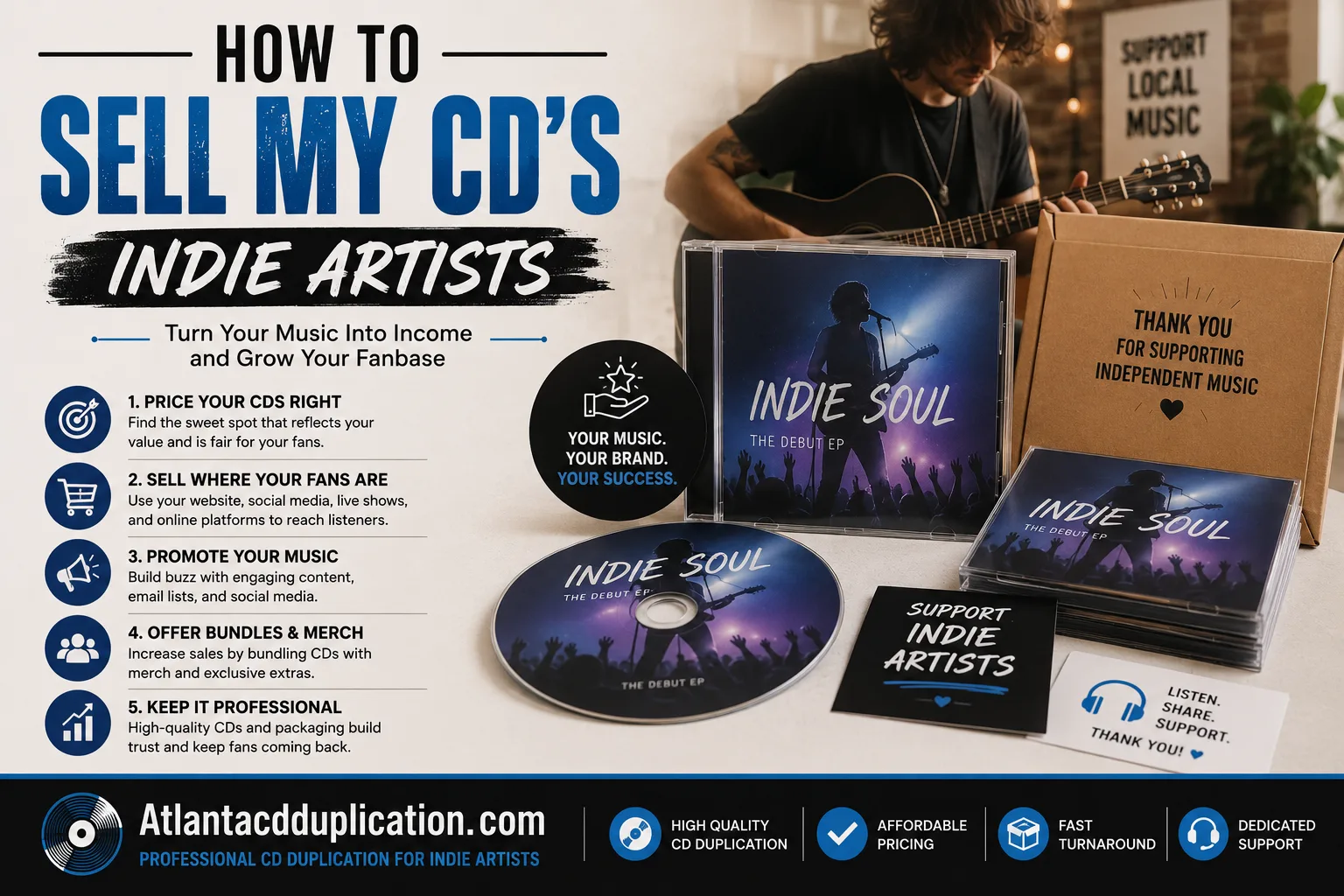
You’ve probably got boxes somewhere right now. Extra copies of an old EP. A live DVD from a tour run. Church message discs left over from an event. Maybe a back catalog that used to move steadily at shows and now just takes up shelf space.
That’s a different problem from the usual “selling my cds and dvds” advice online. Most guides are written for people unloading used media for quick cash. Creators need a different playbook. You’re not just asking what a disc is worth. You’re deciding whether to retail it, bundle it, duplicate a short run, or turn it into a better piece of merch.
Physical media still works. It just works differently now. The artists, labels, DJs, and ministries doing well with it usually stop treating CDs and DVDs like commodity inventory and start treating them like direct-to-fan products with a clear audience, clean presentation, and simple fulfillment.
Is Selling Physical Media Still Worth It in 2026
The short answer is yes, but only if you stop judging physical media by old mass-market standards.
CD album sales in the United States have fallen by 95% since their 2000 peak, with their revenue share dropping to 3.06% in 2024, and U.S. physical video sales fell from $1.05 billion to $754 million in the first half of 2023 according to the cited market summaries at Slashdot’s write-up of the RIAA trend data. That tells you exactly what changed. CDs and DVDs aren’t broad retail products anymore. They’re niche products.

What still sells
Creators still have workable lanes:
- Show merch: Fans buy a disc because they just saw you perform and want something signed.
- Collector editions: Physical packaging gives fans artwork, inserts, lyrics, credits, and ownership.
- Ministry and education use: Churches, speakers, and trainers still need physical handouts in some contexts.
- Direct mail orders: A fan who already knows your work is much easier to convert than a random marketplace shopper.
That shift matters. You’re no longer trying to win a shelf war at a big-box store. You’re trying to give an existing audience a reason to buy a physical object.
Practical rule: If the disc is tied to a real audience, a live event, or a catalog story, it still has a job. If it’s just generic inventory with no audience around it, it becomes much harder to move profitably.
When it’s worth selling
Ask three simple questions before you list anything.
| Question | If yes | If no |
|---|---|---|
| Do people already know this title? | Sell direct and highlight the catalog story | Bundle it or use it as add-on merch |
| Does the packaging add value? | Price it as a physical collectible | Don’t expect the disc alone to carry the sale |
| Can you fulfill it without hassle? | Keep it live in your store | Liquidate, donate, or recycle |
A lot of creators lose money by insisting every disc deserves an individual listing. It doesn’t. Some titles should be sold one by one. Some should be grouped into a catalog bundle. Some are better used as a bonus item with a shirt, ticket, or newer release.
The opportunity in 2026 isn’t volume. It’s margin, story, and fan connection.
Preparing Your Disc Inventory for Sale
You pull a box from storage before a show and find three different versions of the same release. Some are sealed. Some have cracked jewel cases. A few are promo copies you should never have mixed into sellable stock. That is where margin disappears.

Start by separating inventory into two groups: stock already on hand, and titles you may repress or duplicate in a short run. Those decisions use different math. Existing stock is a condition and fulfillment job. A short run is a product planning job tied to fan demand, packaging, and unit cost.
Grade back-catalog stock like a seller, not like a fan
Creators often overrate their own inventory because they remember the release, not the physical condition. Buyers do not. Use one grading system across every channel and keep it boringly consistent.
- Mint or sealed: Unopened stock, suitable for premium placement, signed bundles, or gift buyers
- Near Mint: Opened but clean disc, sharp artwork, intact case, no obvious wear
- Very Good Plus: Light surface or packaging wear, fully functional, still presentable
- Good: Visible wear, complete, playable
- Acceptable: List only if the title has clear demand or supports a bundle
Check the same four points on every unit:
- Disc surface
- Front insert and tray card
- Case type
- Completeness, including booklet, poster, download card, or bonus materials
Be stricter with your own catalog than you think you need to be. Fans will forgive a cracked case if the description is clear. They will not forgive receiving a signed copy that turns out to be missing the booklet.
Decide what should be sold, rebuilt, or retired
Every disc does not deserve an individual listing. Some back-catalog stock should stay exactly as it is. Some should be rebuilt as a cleaner edition. Some should be pulled from sale because the time required to sort, grade, and fulfill it is higher than the likely return.
A refreshed edition makes sense if the old packaging looks dated, the remaining stock is inconsistent, or the title has a natural reason to return, such as a tour, anniversary, remaster, or renewed interest from your audience.
As noted earlier, short runs have changed the economics for independent creators. You can test demand without tying up money in a large pressing. That matters if you run a label store, sell after shows, or want to restock a title for a specific campaign rather than keep deep inventory all year.
Short-run duplication works best when you already know who will buy. Email subscribers, past customers, and live audiences are easier to convert than cold marketplace traffic.
Prep choices that make inventory easier to sell
Presentation affects sell-through, but the operational side matters just as much. If your stock is messy behind the scenes, orders go out wrong, signed copies get mixed with regular copies, and your best units disappear into the wrong bundle.
Use a simple prep checklist:
- Choose the format intentionally: Sleeves, jewel cases, slim cases, and printed jackets all set different buyer expectations
- Keep printed matter readable: Lyrics, credits, liner notes, and tracklists often justify the physical purchase
- Label variants clearly: Separate sealed, signed, promo, and damaged stock before you create listings
- Standardize SKUs: One release can have multiple sellable versions, and each version needs its own count
- Pull one sample copy: Use it to confirm artwork, inserts, barcode data, and any bonus material before the full batch goes live
For creator inventory, clean organization usually beats fancy software. A labeled shelf, accurate counts, and a repeatable grading standard will prevent more problems than an elaborate system you never maintain.
The goal is simple: know exactly what you have, know what condition it is in, and know which titles are strong enough to sell on their own. That gives you a cleaner store, fewer returns, and more room to turn old discs into real catalog revenue.
How to Price Your CDs and DVDs for Profit
Pricing goes wrong in two predictable ways. Some creators copy the cheapest listing they can find and race to the bottom. Others price from emotion and assume every back-catalog title is automatically rare. Neither approach works for long.
Price back-catalog by demand, not nostalgia
If you’re evaluating older discs, start with actual market behavior on platforms where buyers search for physical media. On Amazon, experienced resellers use sales rank as a demand filter, with 100,000 or less as a general target, a sweet spot around 30,000 to 80,000, and anything above 150,000 considered much slower unless the margin is unusually high, as discussed in this reseller video on DVD sourcing and rank.
That matters even if you’re not primarily selling on Amazon. Rank gives you a quick read on whether a title is worth individual attention.
Use that logic like this:
| Inventory type | How to handle it |
|---|---|
| Strong demand title | List individually with full condition detail |
| Moderate demand title | Test retail pricing, then reprice quickly if it stalls |
| Slow demand title | Bundle with related titles or use as merch add-on |
| Damaged common title | Don’t sink time into it unless it supports a bundle |
New and sealed copies usually move faster than used copies. If you have both, keep them separate and price them separately. Don’t blur the distinction.
Price new creator inventory from break-even upward
For your own releases, start with your all-in cost per unit. That includes duplication, printed materials, packaging, payment processing, shipping supplies, and the time it takes to fulfill orders. Then decide whether the item is a simple disc sale or a premium merch product.
A disc by itself is one thing. A signed CD with a lyric insert, download card, or bonus DVD is another. The music may be identical, but the offer isn’t.
If a fan can stream the music anywhere, your price has to reflect what the physical version adds. Packaging, signatures, exclusives, and story are what justify the physical purchase.
A workable pricing lens
Instead of asking “What should a CD cost?” ask:
- Is this a catalog item or a merch item?
- Would a fan buy this for the music alone, or for the object?
- Does this title deserve a standalone listing?
- Would a bundle increase average order value without creating dead stock?
For many creators, the best move is mixed pricing. Keep one standard edition accessible, then offer one better version with signed packaging or extras. That gives casual fans an entry point and gives committed fans a reason to spend more.
Choosing Your Best Online and Offline Sales Channels
The right sales channel depends less on the disc itself and more on how your audience discovers you. A hardcore collector behaves differently from a fan leaving your set. A church member ordering last Sunday’s message behaves differently from an eBay buyer browsing by keyword.
This visual lays out the trade-offs at a glance.

Direct-to-fan usually gives creators the strongest control
If you’re selling your own catalog, direct-to-fan platforms are usually the cleanest foundation. They let you control artwork, product story, bundles, signed options, and follow-up communication. That matters because physical media often sells best when it’s attached to a relationship.
Bandcamp is often useful for artists because fans already expect to buy music there. A self-hosted store gives you more control over branding and packaging options. Both are stronger than broad marketplaces if your goal is repeat customers instead of one-off transactions.
Marketplaces are useful, but they change the game
Amazon, eBay, and Discogs can still be valuable. They bring search traffic and buyers with intent. They also force you into more direct competition on price, condition, and fulfillment discipline.
Discogs is especially useful when the release itself is the attraction. eBay works well for odd back-catalog mixes, promo lots, signed copies, and hard-to-place inventory. Amazon can work for standardized products with clear catalog data.
Here’s a practical comparison.
| Channel | Best For | Typical Fees | Audience |
|---|---|---|---|
| Direct-to-fan platform | New releases, signed merch, bundles | Varies by platform | Existing fans |
| Self-hosted store | Full catalog control, branding, upsells | Varies by stack and payment tools | Fans you already reach |
| Discogs | Catalog buyers, collectors, specific editions | Varies by marketplace rules | Serious physical media buyers |
| eBay | Mixed inventory, bundles, promos, odd lots | Varies by marketplace rules | Broad buyer base |
| Amazon | Standardized catalog inventory | Varies by marketplace rules | Search-driven buyers |
| In-person sales | Shows, church events, conventions | Low platform friction | Warm audience |
A good channel mix usually looks like one primary store and one or two secondary outlets. Don’t scatter the same SKU everywhere unless you can manage stock cleanly.
A short video can help you think through channel fit and direct selling habits.
Offline still matters more than many creators admit
For physical media, in-person selling has one huge advantage. The fan can touch the product while the emotional context is still fresh. After a set, a screening, a conference talk, or a church service, the disc feels immediate and relevant.
A few offline wins that still hold up:
- Merch table placement: Put discs where people can pick them up without asking.
- Signed copy option: A signature turns inventory into memorabilia.
- Bundle with a ticket or shirt: This helps move stock without discounting the disc into irrelevance.
- Local stores and conventions: Best for niche scenes and collector communities.
If you’re serious about selling my cds and dvds as a creator, don’t ask which single channel is best. Ask which channel fits the audience already paying attention.
Creating Listings That Convert Fans Into Buyers
A weak listing can kill a good product. The fix usually isn’t flashy copy. It’s clarity.
Show the item like it matters
Use clean photos with plain backgrounds and consistent lighting. Front cover, back cover, disc face, spine, and any insert worth mentioning should all be visible. If it’s signed, photograph the signature clearly. If the jewel case has a crack, show it.
Fans will tolerate minor flaws. They won’t tolerate surprises.
For a back-catalog item, the description should answer practical questions fast:
- What format is it?
- What condition is the disc in?
- Is it sealed, signed, or standard?
- Are inserts included?
- Is this an original release, reissue, promo, or short-run edition?
Sell the object, not just the audio
For your own release, the listing should explain why a physical copy is worth owning. Don’t just paste the tracklist and call it done.
A stronger creator listing usually includes:
- Context: Why this release exists
- Format details: Case type, inserts, signatures, bonus content
- Ownership appeal: Lyrics, credits, artwork, collectible value
- Fulfillment expectations: Whether it ships sealed, signed, or made-to-order
Buyers convert faster when they understand exactly what lands in the mailbox.
Two listing angles that work
For a new EP
Lead with the story. Mention the packaging, whether copies are signed, and what makes the physical version different from streaming. If there’s a lyric booklet or a personal note, say so plainly.
For an older DVD or promo disc
Lead with specifics. Format, runtime or content summary, condition, packaging completeness, and whether it’s an original run matter more than emotional copy.
A simple listing framework:
- Product name and format
- One strong line about why it matters
- Bullet details on condition or included materials
- Shipping note
- Clear call to buy now, especially if stock is limited
The best listings reduce uncertainty. That’s what gets the sale.
A Creator’s Guide to Packaging Shipping and Returns
Shipping is where a clean sale can still go bad. If a cracked case or loose disc shows up in the mail, the customer remembers the problem more than the music. Good fulfillment protects both the product and your reputation.

Package for impact resistance
Use materials that match the format. A single jewel case in a thin mailer with no stiffener is asking for damage. Sleeved discs and packaged jackets still need rigidity, even if they don’t need a box.
A dependable packing routine:
- Protect the disc first: Inner sleeve or original tray should hold it firmly.
- Prevent bending: Add cardboard stiffeners or use rigid mailers.
- Cushion the case: Bubble mailers work for many single-unit orders.
- Keep inserts flat: Don’t let booklets slide around loose.
Make shipping terms simple
Tell buyers when you ship, what carrier you use, and whether tracking is included. If a shipping service qualifies for your product, use it. If not, don’t force a cheaper method that creates confusion or damage.
For international orders, keep it selective. Start with countries you can serve confidently. If customs forms or delivery issues create too much friction, limit those orders until your workflow improves.
A short thank-you note, signed insert, or small flyer often does more for repeat business than cutting a few cents from the package.
Returns should be clear, not complicated
You don’t need a giant legal document. You need a fair policy buyers can understand. State what happens if an item arrives damaged, what qualifies for replacement, and how buyers should contact you.
For creators, the strongest approach is usually:
- Replace obvious transit damage quickly
- Be stricter on opened media when the issue is buyer’s remorse
- Document condition before shipping
- Respond fast and calmly
That kind of professionalism turns a small physical order into trust. Trust is what gets the second order.
Frequently Asked Questions About Selling CDs and DVDs
Do I need a UPC for my release
Not always. If you’re selling mainly at shows, through direct messages, or in your own store, you can often operate without one. A UPC becomes more useful when a platform, retail workflow, or distributor expects standardized product identification. If you want cleaner catalog management, it can help.
Should I sell discs individually or as bundles
Use individual listings for titles with recognizable demand, clean packaging, or collector appeal. Use bundles when you’ve got multiple common titles, slow-moving back stock, or leftover inventory from older campaigns.
That decision matters more now because the overall physical media market keeps getting thinner, and Eaglesaver notes CD revenue was down 19.5% year over year in 2024, which is one reason many common discs only fetch pennies and are often better moved in lots in this discussion of whether selling discs is worth it.
When should I donate or recycle instead of listing
Do it when the labor stops making sense. If the title is common, condition is weak, and the likely sale won’t justify photos, messages, packaging, and shipping, move on. A donation, giveaway, or fan-bundle freebie may create more goodwill than a low-value solo listing.
The biggest mistake in selling my cds and dvds is assuming every piece of inventory deserves equal effort. It doesn’t. Put your time where demand, presentation, and fan value line up.
If you’re planning a new short run or want to turn older catalog ideas into cleaner physical products, Atlanta Disc offers CD and DVD duplication, packaging options, printed inserts, and related merch support for artists, DJs, churches, and indie labels.